This is the first in an ongoing series of reflections on the idea of a “soft life” and what it could mean to create a life with more sustainability, honesty, and room to breathe.
I’ve been thinking about the phrase soft life recently. Online, the term can sometimes get flattened into aesthetics like candles, skincare routines, slow mornings, and beautiful cups of coffee. While I enjoy a cozy morning as much as anyone, my intuition told me the idea of living a soft life was pointing to something deeper.
I’ve learned that the phrase soft life emerged largely from Black women speaking honestly about exhaustion, survival, overwork, and the desire for lives that feel more humane and sustainable. I appreciate that context and want to honor the truth and lived experience of the soft life movement. I think it poses a deep question:
What kind of life allows a person to remain fully human?
For many years, I was very good at pushing through.
In ministry, there was always another sermon to write, another meeting on the schedule, another person who needed care. There were many parts of that work that I loved deeply. It was meaningful, relational, creative, and often sacred. But somewhere along the way, pushing through became so normal that I wasn’t always sure who I was in the midst of it.
I had been praised throughout my ministry career for being capable, organized, productive, dependable, and resilient. Those qualities served me in many ways. But, I can see now that sometimes I was tending the softness in others while ignoring the ache in myself.
White-knuckling life, for me, looked like overriding my own humanity in order to meet a deadline. It looked like pushing my creativity aside because there wasn’t time for it. It looked like numbing out when I finally had a moment alone ~ instead of truly resting. It looked like disconnection from my body, spirit and, eventually, even my own desires.
There were seasons when I wasn’t entirely sure what fed my soul anymore or what brought me alive outside of accomplishment and the appreciation of others.
That realization was painful.
Over the last eight years, since leaving full-time church ministry, I think I’ve slowly been recalibrating toward a life that feels inhabitable from the inside. Not a perfect life, but a more sustainable one.
I’ve become less tolerant of hardness, urgency, and pushing through.
I’m also learning that, as someone who is deeply introverted, contemplative by nature, and highly sensitive, I need more space than some people do to process and integrate my experiences. For a long time, I judged myself for that. I compared my pace, my energy, and my capacity to people whose nervous systems worked differently than mine. Now I’m beginning to understand that needing spaciousness doesn’t make my way of moving through the world less valid. It simply makes it mine.
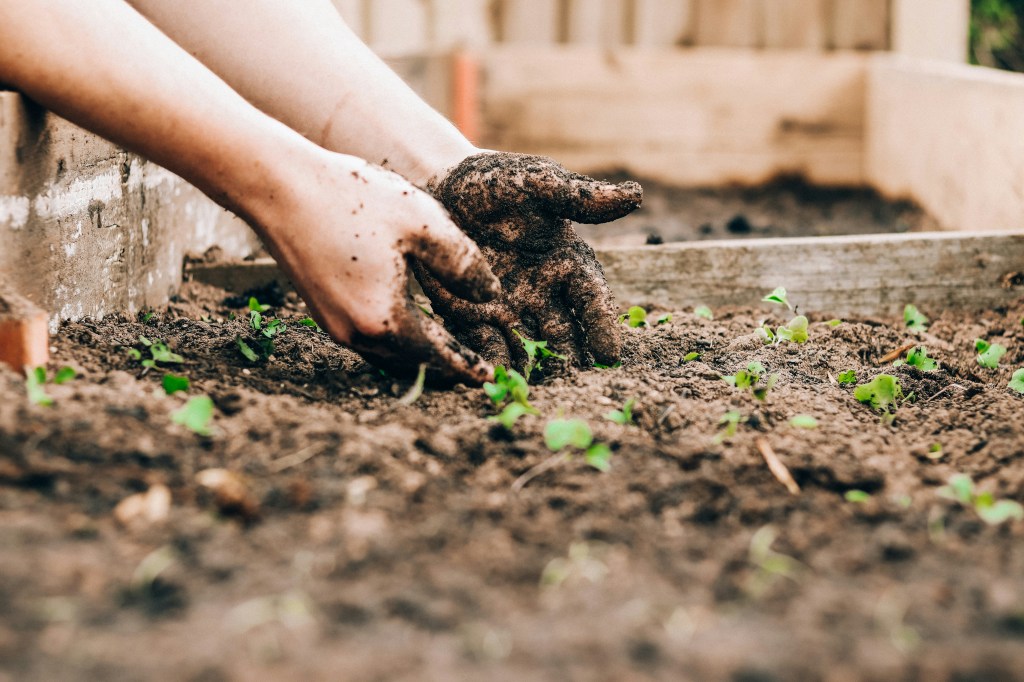
These days, I feel most like myself in very ordinary moments. Gardening. Reading poetry. Walking. Making cookies. Playing with my dogs. Having meaningful conversations with dear friends. Doing work that allows room for creativity and connection without rushing to check the next thing off a list.
I’m learning that softness isn’t the absence of depth or responsibility. Neither is it avoidance or laziness. It certainly isn’t perfection wrapped in scented candles and good lighting.
Sometimes softness is a bubble bath but, more often, I think, it’s honesty.
Softness is noticing when your body is exhausted instead of pushing past it. It’s allowing grief to take up space. It’s releasing the belief that your worth is measured by your productivity. It is choosing a pace that your spirit can actually survive.
On this journey, I’m learning the difference between growth and self-improvement. Self-improvement often begins from the assumption that we are flawed projects constantly in need of fixing. It is rooted in who we think we should be. Growth, it seems to me, happens more organically. It emerges through curiosity, attention, experience, rest, and relationship. Growth happens when we become more connected to ourselves, not more critical of ourselves.
I think that distinction matters, because one leads toward wholeness while the other often leads toward exhaustion.
Of course, fears still arise when I think about living more softly. I worry sometimes that I won’t accomplish enough. That I’ll become irrelevant. That I won’t make a meaningful difference with my one wild and precious life.
But then another question rises alongside those fears: What is the point of accomplishing everything if I don’t feel alive while I’m doing it? What if the point of this one wild and precious life is simply to be here for it?
I have often said over the years, “I don’t want a life I have to recover from.”
I think that may be the closest thing I have right now to a definition of a soft life.
A soft life isn’t an easy or painless life. It’s a life with enough room to breathe. It’s a life with enough room to connect with what is real and what brings me alive.
I’m still learning what that means.
I think it begins by loosening our grip just enough to remember that we are human beings, not machines for output and endurance.
Perhaps softness begins when we stop trying to earn our one wild and precious life and simply allow ourselves to live it.
A few questions to hold:
- Where in your life have you normalized “pushing through”?
- When do you feel most connected to yourself?
- What kind of life allows you to remain fully human?
If this reflection resonates with you, I’d love to hear from you. Much of my work through spiritual direction, grief companionship, and small groups centers around creating space to listen more honestly to our lives and the wisdom within them. You are always welcome to reach out. I would love to connect.
***********
Kristabeth Atwood is a spiritual director, writer, and celebrant who creates spaces for reflection, connection, and meaning in life’s transitions. You can reach out to learn more or schedule a discernment session with Kristabeth.
 Posted by


🧡❤️🧡Sent from my iPad
LikeLiked by 1 person